Foriio: Improving Activation (+8%) & Retention (6%)

About Foriio
Foriio is a global portfolio platform that helps designers, illustrators, photographers, and creative professionals showcase their work beautifully. It enables users to build clean, professional portfolios, gain visibility, and attract clients or job opportunities. With thousands of creatives using the platform, Foriio’s success depends heavily on its ability to activate new users and bring them back consistently.
Challenge 1: Activation Problem
Foriio noticed that although many users were signing up, a large percentage were not completing a key activation milestone: adding their first work to their portfolio. This resulted in:
- Low activation rates
- Incomplete portfolios
- Users who signed up but never meaningfully experienced the product’s core value
Upon reviewing behaviour patterns, we found that:
- Many users signed up impulsively but didn’t have their work ready to upload immediately.
- The upload workflow was not intuitive, causing users to drop off before completing the first step.
Solution
We conducted a full audit of the onboarding and upload behaviour using analytics, session patterns, and user interviews. Based on this, we implemented a two-part solution:
1. Behaviour-driven email nudges
We created a tailored sequence of email reminders and prompts designed to:
- Remind users to add their first work
- Reduce hesitation by highlighting how easy and fast it is
- Showcase examples of successful Foriio portfolios
These notifications were timed based on user behaviour (not generic blasts) which significantly improved engagement.
2. Simplified the “Add Work” flow
We redesigned the workflow to make publishing first work almost instant:
- Streamlined the steps into a clean 2-click process
- Reduced clutter and unnecessary fields
- Provided clearer guidance on what users should upload
This removed friction and enabled users to quickly experience the platform’s core value.
Result
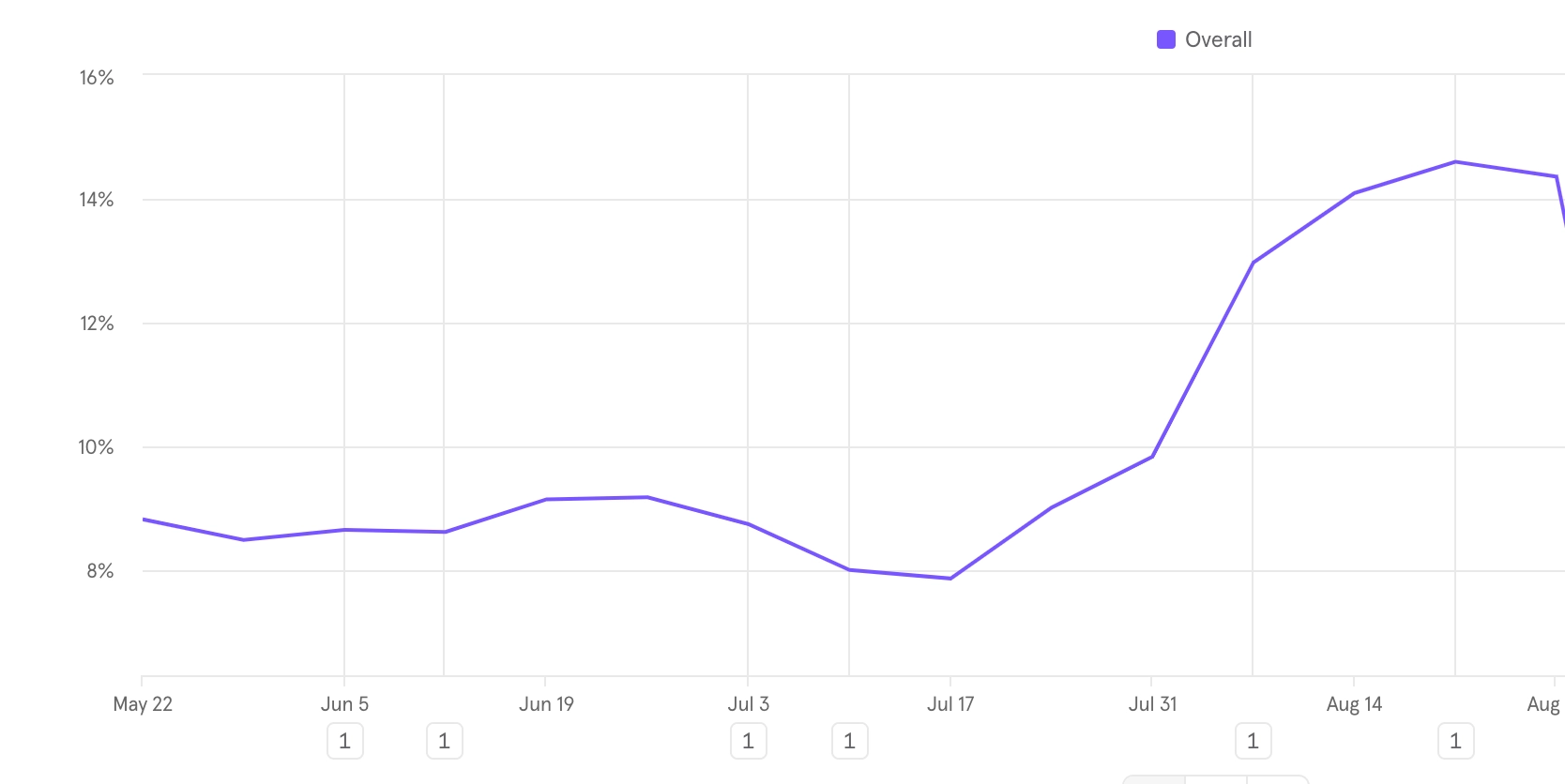
The activation rate, defined as users who uploaded their first work after sign-up, improved by 8%.
More users reached the “aha moment” of seeing their portfolio come to life, which strengthened downstream metrics as well.
Challenge 2: Retention Problem
Even after users uploaded their first piece of work, many of them did not return to the platform. For a portfolio product, this behaviour was expected to some degree: users only come back when they have something new to share. However, this pattern hindered long-term retention and limited Foriio’s growth.
Through analysis, we identified two major reasons for the drop-off:
- Users did not have frequent new work to upload.
- They simply forgot about Foriio because nothing pulled them back after their initial setup.
Solution
We focused on creating ongoing value for users, even when they weren’t actively uploading new work.
1. Timely engagement notifications
We designed personalized notifications that would bring users back when something meaningful happened on their profile, such as:
- New views on their work
- Portfolio activity spikes
- Performance updates over time
These nudges served as reminders that their online presence was living and growing.
2. Introducing new “sticky” features
To add reasons for users to return, we suggested and implemented features that naturally drive ongoing engagement:
- Portfolio AnalyticsUsers could track impressions and views on their uploaded work, creating a continuous loop of interest and motivation.
- Blogging/Content Creation ToolsThis allowed users to share updates, thoughts, or case studies without needing new visual work, giving them more touchpoints with the platform.
These features extended the usefulness of the platform beyond portfolio uploads.
Result
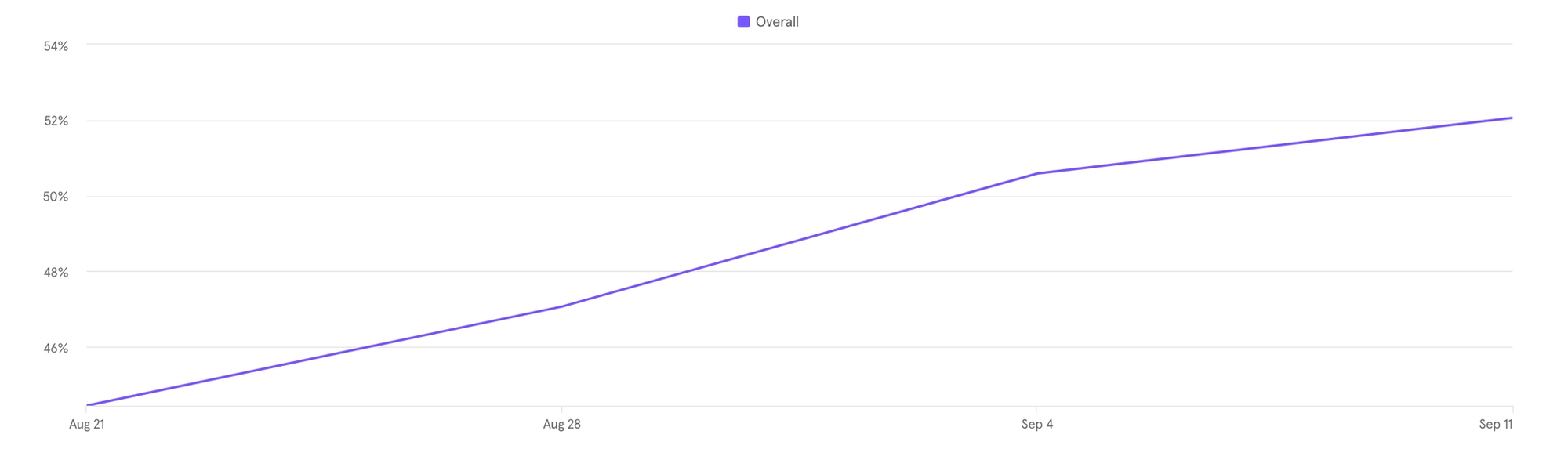
Retention improved by 6%, driven by recurring value moments and better ongoing engagement. Users returned more often to check analytics, publish updates, and stay connected to their audience, transforming Foriio from a one-time setup tool into a continuous creative hub.